Your Guests Know Your Culture Within Five Minutes. Do You?
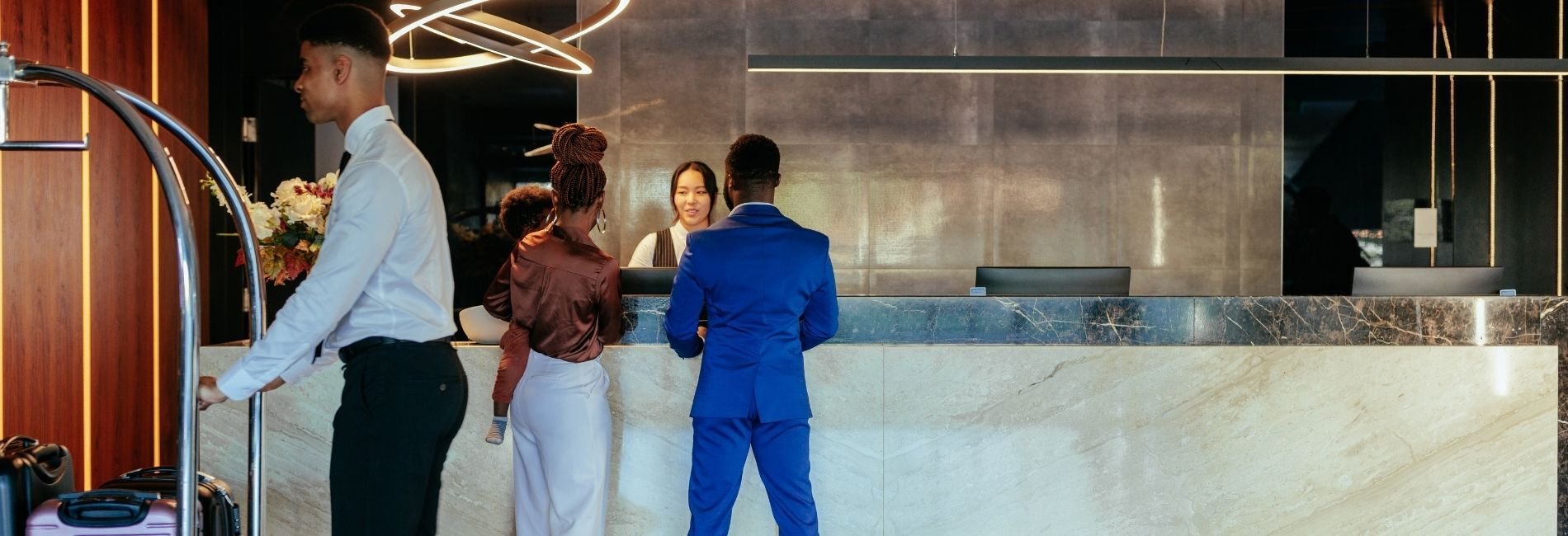
When Employee Experience Thrives, Guest Experience Follows. Here's What Most Operators Are Still Missing.
Walk into any hotel or casino and give it five minutes.
Not five hours. Not a full stay. Five minutes.
According to ComOps SVP of Sales & Customer Success, Sofya Williams, that's all guests need to read the room, and they're rarely wrong.
"Guests can tell within about five minutes whether a hotel or casino has healthy culture," says Williams. "Not because of the lobby, not because of the brand standards, not because someone said welcome. They feel it in the energy."
Williams has spent her career at the intersection of employee experience and guest experience, and her argument is straightforward: most operators still treat these as two separate problems, even though guests have always experienced them as one.
The gap between what leadership measures and what guests actually feel is where loyalty quietly goes to die.
The Lobby Looks Great. Something Still Feels Off.
You've seen the property. Renovated rooms, a solid loyalty program, brand standards that check every box.
And yet, the reviews keep mentioning the same vague complaints. "Something felt off." "Service was fine but the place felt disorganized." "Nobody seemed happy."
Guests are not reading your operational dashboards.
They are reading your people.
They notice when a front desk agent hesitates before answering a question. They clock the housekeeper who avoids eye contact. They feel the difference between a team running smoothly and a team simply surviving the shift. None of this shows up in RevPAR or occupancy rates, but it shows up everywhere else.
Research consistently supports this. Gallup's meta-analysis across 276 organizations found that top-quartile engagement business units outperform bottom-quartile units by 10% in customer ratings and 21% in profitability. In hospitality, where the product is almost entirely experiential, that gap compounds fast.
"Guests are incredibly emotionally intuitive," Williams says. "They know when service is authentic, and they definitely know when employees are exhausted, frustrated, unsupported, or disconnected."
The problem is not that operators don't care about this. Most do. The problem is where they're looking for the answer.
Two Dashboards, One Guest
Here is how most hospitality organizations are structured: HR owns employee experience. Operations owns the guest experience. Each team has its own metrics, its own reporting cadence, its own set of priorities.
On paper, it looks like comprehensive coverage. In practice, it creates a blind spot the size of a ballroom.
"Most organizations still treat CX and EX like two separate initiatives," Williams explains. "Two separate dashboards, two separate teams, two separate conversations. EX is often an HR issue, but the guest experiences them as one thing."
No guest has ever checked out and said, "The employee experience metrics seemed low." They say the place felt disorganized. They say service declined. They leave a three-star review and move on. By the time that feedback surfaces in a leadership meeting, the damage is already done and the structural cause has been filed under the wrong department.
This organizational split is not just inefficient. It is actively expensive. When employee morale dips, it does not stay backstage.
Communication gaps reach the guest. Broken processes reach the guest. Tech frustrations that staff have been flagging for months eventually reach the guest. Every single time.
"Even broken process eventually reaches the guest," Williams says. "Every communication gap eventually reaches the guest. Every tech issue eventually reaches the guest. Every morale issue eventually reaches the guest."
The math on turnover alone makes the case. The Society for Human Resource Management estimates the cost of replacing a single employee ranges from 50% to 200% of their annual salary. In hospitality, where turnover rates regularly exceed 70% annually, that is not a people problem. That is a revenue problem wearing an HR badge.
The People Who Already Have the Answers
Here is the part that should be uncomfortable for anyone in a senior operations role: your frontline staff already know exactly where the problems are. They have known for a while.
"Ask a front desk agent, ask a VIP host, ask your housekeeping, ask reservations," Williams says. "They can typically tell you within five minutes what frustrates guests, what slows down the service, what creates tension, what causes complaints, and what's costing the property money."
Five minutes. The same amount of time it takes a guest to read your culture. The same amount of time your staff would need to walk you through every friction point in the operation. The information is sitting there. The question is whether anyone is asking.
Too often, the answer is no. Not because leadership is indifferent, but because listening to employees has been treated as a morale initiative rather than an intelligence-gathering exercise. Exit interviews happen after people leave. Engagement surveys run once a year. Feedback loops, when they exist, are slow and rarely tied to operational decisions.
"Too often, organizations only listen to employees after turnover spikes or guest satisfaction drops," Williams notes. "At that point, the guest experience problem has already become expensive."
The properties getting this right are not waiting for the crisis. They are treating frontline insight as operational data and acting on it with the same urgency they would give a drop in booking pace.
When Backstage Runs Well, the Show Takes Care of Itself
The shift Williams is describing is not about perks or ping pong tables. It is about recognizing that employee experience is infrastructure, and like all infrastructure, when it is neglected long enough, something breaks.
"Employee experience is not just an HR initiative, it's operational strategy," she says. "When employees feel supported, informed, empowered, and connected to the operation, service gets faster, recovery gets better, upsells happen more naturally, and communication improves."
The operational logic tracks. An empowered front desk agent handles a complaint before it becomes a one-star review. A well-briefed VIP host anticipates a guest's needs instead of reacting to them. A housekeeping team that is not understaffed and under-communicated does not leave rooms half-finished at 3 PM. These are not culture wins. They are margin wins.
"Guests spend more, guests return more frequently," Williams says. "The properties that create the best guest experience are usually the ones where employees feel the best backstage. Not perfect, just supported."
That last distinction matters. The goal is not to manufacture enthusiasm or build some frictionless utopia. It is to give employees what they need to do their jobs without fighting the operation at every step. When that happens, guests feel it before they can even articulate why.
The Clearest Signal in the Building
No proprietary technology is required to diagnose the health of a hospitality operation. Walk in. Give it five minutes. Notice whether the staff moves with confidence or caution. Notice whether problems get handled or passed around. Notice whether the energy in the room feels like a team that is winning or a team that is just getting through the day.
"That's probably the clearest signal of operational health there is," Williams says.
The operators who are pulling ahead are not just investing in better PMS systems or loyalty program redesigns. They are closing the gap between what they measure and what guests actually experience, starting at the employee entrance, not the lobby.
Guest experience does not begin at check-in. It begins with how a pre-shift meeting is run, whether a manager follows through on a request, and whether the person behind the front desk feels like someone has their back. Get that right, and the five-minute test takes care of itself.
ComOps is built for operators who understand that what happens backstage determines everything out front. If you are ready to close the gap between employee experience and guest experience, start the conversation. Reach out below.
HAVE QUESTIONS? CONNECT WITH US.