Loyalty Is the Car, Not the Wheel: Lessons from Fontainebleau Miami Beach
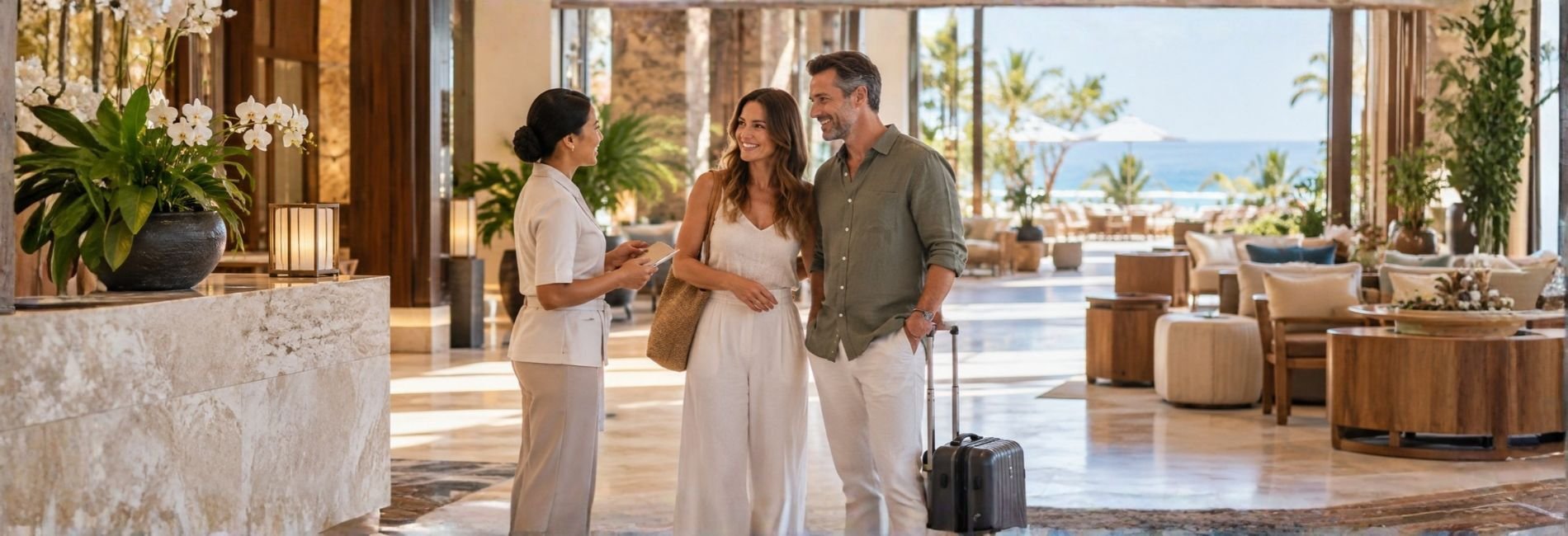
How to earn repeat guests by reading behavior instead of chasing scores, giving your front line a real voice, and using AI to make your team more present.
Hotels have never had more guest data. NPS dashboards glow, review scores get tracked to the decimal, and post-stay surveys land in inboxes before the guest has unpacked.
So here is an awkward question: if we know so much, why is hotel guest loyalty still such a guessing game?
That question drove a recent conversation between Sofya Williams of ComOps and Sam Sutter, Vice President and Hotel Manager of the iconic Fontainebleau Miami Beach.
Sam runs a property with more than 1,700 employees and anywhere from 3,000 to 5,000 guests on a heavy weekend. That is a lot of check-ins, a lot of towels, and a lot of chances to win or lose a guest for life.
Sofya set the tone right away: "As an industry, we've been doing a great job measuring guest experience, but I'm not sure we've done a good job really understanding why guests choose our hotels and what gets them to come back to us."
What followed was a candid conversation about what guest loyalty really looks like on the ground, and why the answer has less to do with scores than most of us think.
Stop Keeping Score: What Fontainebleau Knows About Why Guests Come Back
The Scoreboard Is Full, the Picture Is Not
NPS, Medallia post-departure surveys, online review scores: none of these are bad tools. Sam calls them "a great judgment of how the guests or what the guests are saying." The trouble is who is doing the talking.
"It's a very small minority that actually fills out the surveys," Sam said, "usually if something goes wrong, right? Not all the time if it's positive."
That creates a quiet distortion. Survey data over-represents guests annoyed enough to type and under-represents the silent majority who decide, without telling anyone, whether to come back.
A score can look healthy while loyalty leaks out the side door. Some operators call this the watermelon effect: green on the outside, red on the inside.
Scores also measure a moment. They tell you how a guest felt about a stay, not what they'll do next. And what they do next — book direct, return in the spring, bring the family, recommend you to a planner — is the part that pays the bills.
RELATED: Your Guests Know Your Culture Within Five Minutes. Do You?
Fashionably Late: What Score Obsession Really Costs
Waiting for the survey means waiting for the damage.
Sofya says: "By the time you hear about it from the guests, it's already too late." The towel that took 40 minutes, the pool that ran out of loungers by 10 a.m., the phone that rang eight times before anyone picked up. By the time any of it shows up in a score, the guest has already formed the memory, and possibly already booked somewhere else next year.
There is a people cost, too.
When scores become the only yardstick, team members start to fear them. Sam warned against that trap: "We don't wanna come off as micromanaging or scare our team members that they're gonna get in trouble if they get a negative review." A team afraid of the scoreboard plays not to lose, and guests can feel the difference between a host and someone avoiding blame.
Then there is the money.
Every booking that comes through an online travel agency carries a commission, often 15 to 25 percent, and hands control of the relationship to a third party.
As Sam noted, with an OTA "you also don't have control of that booking." If the only thing separating your hotel from the next listing is a points program and a price, the OTA can match both. Guests drift to whoever makes booking easiest, and the acquisition cost repeats every single stay.
Your Best Guest Data Wears a Name Badge
Every guest who skips the survey still talks to someone. "Every guest is interacting with a team member," Sam said, "whether it's through the arrival experience or pre-arrival, all the way through the departure experience in the outlets, at the pool."
That makes the front line the building's richest listening post. The door person hears the airport horror story, and the room attendant knows the shower pressure in 1412 is a problem long before it becomes a one-star review. Sofya summed it up: "Your employees, your team members know exactly what's not working."
The catch is timing. Sam cautioned against "a bad habit sometimes as hoteliers is waiting for a team member survey at the end of the year." His alternative is presence: attending pre-shifts, walking the floor, eating lunch where the team eats, and keeping an open door from the executive office down to department heads. He also trusts the people closest to the work to fix it: "If we got an SOP that we set up in an ivory tower somewhere and made it three years ago, and it's not working, we need to fix that."
The second listening post is operations data that guests never see. At Fontainebleau, the leadership team studies service ticket trends in HotSOS by time of day, season, and weekday versus weekend. They track call wait times, how long it takes to get towels to a room, and consumption at the pool and restaurants. "It really helps us understand how we support our team and be prepared and really be proactive compared to reactive," Sam explained.
A guest who calls twice about the same request or books the same room every spring is telling you more than any survey field ever could.
Loyalty Is the Car, Not the Wheel
Hotels love a loyalty program, and so does Sam. But hotel guest loyalty runs deeper than points. "You can think of loyalty as your vehicle, right? And a loyalty program is one of the wheels of that vehicle," he said. "But at the end of the day, loyalty is really built through customer experience."
In practice, that means consistency that keeps climbing. Guests should know they will get the same experience every visit, "but it's only getting better. It's not going backward." Points reward loyalty that already exists. Experience creates it.
It also means keeping pace with who your guest is becoming. Sam pointed to Miami Beach's shift toward family travel, where one experience now has to flex for adults with kids and adults escaping them.
Loyalty doesn't end at checkout. "If I'm not in touch with you post your departure, do you feel like you're really kind of part of our brand?" Sam asked.
Regular, relevant communication after a stay keeps the relationship warm until the next booking. Without it, the guest is a free agent again. His bottom line is hard to argue with: "We would not be successful if we relied on a new guest every single stay."
Sam's path to more direct bookings is the basics done well: an easy website, a phone answered quickly by someone who can help, and agents who are excited to talk about the property. Without that culture inside, he warned, "the loyalty is really gonna go to those OTAs."
Friendly Competition, Serious Results
If culture drives loyalty, who drives culture? Sam leans on a sports mindset, and recognition over cash. "We want the front desk to try to beat the bell desk. We want the bell desk to try to beat the valet," he said, with signature restaurants Hakkasan and Prime 54 getting in on the rivalry too. Each team raises its game, and the guest wins every match.
The twist is how accountability works. "Accountability doesn't mean always getting somebody in trouble," Sam said. "Sometimes it's just having a conversation and a training and it's an opportunity for coaching." Feedback, positive or negative, becomes fuel for recognition and retraining rather than a reason to hide.
His most interesting practice is the quality assurance meeting, held every two weeks. Leaders are not required. Team members are. Each session sends them to a different part of the hotel so a door person can hear from a condo concierge and a condo concierge can hear from a room attendant. "Now you're understanding it full circle," Sam said. Guests do not see an org chart, as Sofya pointed out. They see one stay, from valet to pillow to breakfast. Teams who have walked in each other's shoes deliver it more seamlessly.
The proof is in the tenure. Fontainebleau has room attendants with more than 50 years of service and a bell person at 49. That kind of longevity is a culture metric no survey captures, and it shows up in every guest interaction.
This aligns with a classic piece of hospitality thinking: the service-profit chain, engaged, well-supported employees deliver better service; better service builds loyalty, and loyalty drives revenue. Sam's approach simply refuses to skip the first link.
"I Don't Have 5,000 Doormen": AI as an Availability Engine
Any conversation in 2026 is, as Sofya joked, legally obligated to mention AI. Sam's take is refreshingly grounded. AI is not there "to do the job of any of our team members, but it is to make us more efficient. It's to make us more available."
Availability is a word Sam preaches across the property, and he defines it carefully: "Available doesn't mean I can call you and you're gonna come running. Available means I see you. If I'm a guest, you're present." On a weekend with thousands of guests, presence is a staffing math problem. "I don't have 5,000 doormen. I don't have 5,000 front desk agents."
Here is where Fontainebleau is putting AI to work:
- Preference capture on the phone. If a caller asks about the menu and lights up about certain dishes, the system can note it so the outlet, front desk, or VIP team has it ready when the guest arrives.
- Back-office relief. Scheduling 240 room attendants could shrink from a week of work to two days, and leaders could stop spending three hours every night on email and reports after a full day on the floor.
That preference capture points to a bigger idea Sofya raised: better listening may mean asking fewer questions. If a hotel can read signals from calls, service requests, and spending patterns, it does not need a 30-question survey to learn what a guest values. Guests get less homework, and hotels get better data.
Where the Robots Clock Out
Sam is just as clear about where AI does not belong. Companies have pitched him digital screens to handle check-in. His answer: "That will never be the case, at least in that form, for that arrival experience."
Arrival is an emotional moment. A guest may be exhausted from a delayed flight, wrangling kids, or celebrating something big. Reading that and responding to it is still a human skill. "Our guests wanna be able to have that human touch," Sam said, and to talk with someone who can sense "the stress that their travels might have caused them and how we can de-stress them."
The line is useful for any operator. Automate the tasks that pull people away from guests. Protect the moments where the guest needs a person. As Sam put it, what made hospitality successful 100 years ago "is still what's making us successful now, and that's the team member."
The Road Back to Repeat Guests Runs Through the Lobby
Sofya closed by asking Sam for the one thing a hotelier could do differently next week. His answer took four words: "Get out of the office."
"We are only as good as the team that's out front, and we need to be part of that team," he said. Use AI to be efficient. Use your tools to prepare. Then stand next to your people, listen to their voice, and coach.
Sofya's answer completed the picture: "Stop measuring guest experience and really start looking at guest behavior, because then you can determine how you can really influence it and how you can build that loyalty."
The scoreboard will always matter. But the hotels that win repeat guests understand why the score moved before it ever posts. In hospitality, the best data still walks the floor.
Build Hotel Guest Loyalty with ComOps
Knowing you should read guest behavior is easy. Pulling the signal out of surveys, reviews, service tickets, and team member feedback, then turning it into action on the floor, is where most properties stall.
That is the work ComOps does every day. ComOps partners with hotels, casinos, and service-driven organizations to optimize operations and elevate both guest and employee experiences. The goal is the same one Sam described: more loyalty, lower costs, and stronger revenue.
Working with ComOps, your team can:
- Catch problems before guests do. Bring guest feedback, operational data, and team member insight together so you understand why scores move and can act early.
- Give your front line a voice. Turn what your team hears every day into decisions leadership can act on.
- Build loyalty that drives direct bookings. Focus on the experience that brings guests back, so you are not paying to win them again every stay.
If your dashboards are full but the reasons guests return still feel like a mystery, let's talk.
Schedule a conversation with the ComOps team and find out what your guest data is really trying to tell you.
HAVE QUESTIONS? CONNECT WITH US.