Turning Guest Experience into Business Performance
By Robert Levine
2026 Global Gaming Expo | Las Vegas | October 1, 2026
A practical conversation about how consistency, leadership, employee experience, and service recovery influence loyalty and profitability. |
At the 2026 Global Gaming Expo in Las Vegas on October 1, I had the privilege of moderating a panel focused on a challenge that affects every casino operator: the financial and operational cost of an inconsistent guest experience.
The session, “The Hidden Cost of Inconsistency: Why Guest Experience Variability Is Killing Profitability,” featured three accomplished gaming leaders: Antonio Perez, General Manager of Rivers Casino Portsmouth; Craig Pleva, General Manager of SAHARA Las Vegas; and Todd Whaley, Director of Customer Experience at Yaamava’ Resort & Casino.
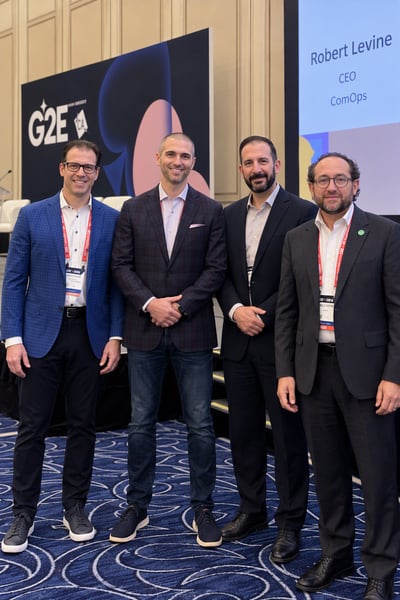 Surrounded by some of the gaming industry’s best casino operators, the panelists brought practical insights, thoughtful perspectives, and a shared understanding that customer experience is not simply a service metric. It is a business discipline that influences loyalty, frequency, wallet share, retention, and profitability.
Guests Do Not Experience the Average
One of the most important ideas from the conversation was simple: Guests do not experience our averages. They experience individual moments.
A guest might have an exceptional first visit, an acceptable second visit, and a frustrating third visit. The property’s average satisfaction score may still look healthy, but that average does not reflect the uncertainty the guest experiences. What matters is whether guests can trust the property to consistently deliver on its promise.
The discussion explored how high and low experiences can cancel each other out in an overall score. A stable property-level result can conceal problems within a particular shift, outlet, channel, loyalty tier, or stage of the guest journey. To understand what is really happening, operators must examine both the average and the distribution of experiences around it.
This is precisely where guest experience variability becomes a business risk. When guests do not know which version of the property they will receive, their behavior can change well before the headline score reveals a problem.
Leadership Must Champion the Initiative
A recurring theme throughout the panel was the importance of senior leadership visibly championing customer experience initiatives.
Customer experience cannot live exclusively within a survey platform or be delegated to a single department. It must be supported by leaders who are willing to connect guest feedback to operational decisions, establish accountability, and remove barriers between functional areas.
Casinos may operate through separate hotel, gaming, food and beverage, entertainment, reservations, transportation, and service teams, but the guest experiences one destination. Departmental performance can appear strong while the total journey underperforms, particularly when handoffs between teams create friction. Solving these issues requires cross-functional ownership, clear escalation paths, common measures, and leadership support.
Senior leaders also play an essential role in prioritization. Most properties can identify dozens of possible improvements, but not every issue carries the same business impact. The most effective organizations consider guest volume, guest value, frequency, severity, strategic importance, and their ability to act before committing resources.
Customer Service Begins with Employee Experience
The second major theme was that customer service starts with employee experience.
Employees deliver the guest experience in real time. They manage expectations, navigate operational challenges, solve problems, and represent the property during the moments guests remember most. If employees do not have the training, tools, authority, communication, and leadership support necessary to succeed, consistency becomes extremely difficult to maintain.
This means that what initially appears to be a customer experience problem may actually be an employee experience, process, or operating-model problem. Improving the guest journey therefore requires operators to listen to employees, understand the obstacles they encounter, and make it easier for them to deliver the intended experience consistently.
Technology and data can help identify where variability exists, but they cannot replace engaged employees or effective leadership. Sustainable improvement occurs when teams understand the desired experience, know how their work contributes to it, and are empowered to respond when something goes wrong.
Service Recovery and Closing the Loop
The concept of the service recovery paradox also played an important role in the conversation. When a problem is handled quickly, personally, and effectively, the recovery can strengthen the guest relationship. However, that outcome is not automatic.
The key is closing the loop with the guest.
Collecting feedback without acknowledging the guest or acting on the issue creates another layer of frustration. A successful closed-loop process identifies the problem, assigns accountability, responds to the guest, resolves the operating cause, and evaluates whether the experience and subsequent behavior changed.
This is why service recovery should be connected to operational and financial information. Operators should examine feedback alongside wait times, staffing, occupancy, transactions, loyalty tier, trip type, gaming revenue, hotel spend, and ancillary spend.
Measuring Movement That Matters
We also discussed the importance of measuring how guests migrate between NPS stages. When a customer moves up or down, that transition can represent more than an 11% gain or loss. The opportunity and risk are especially significant in the VVIP segment, which can contribute the greatest potential revenue growth or risk reduction.
This reinforces why operators should not treat every point of feedback or every inconsistency equally. A relatively uncommon experience affecting a high-value relationship may carry greater financial consequences than a frequently reported but lower-impact issue.
The panel’s action framework was straightforward: Find, Size, Prioritize, Fix, and Prove. Find where inconsistency occurs. Size the affected guest population and value. Prioritize the issues with the greatest business effect. Fix the underlying operating cause. Then prove whether guest behavior and financial performance changed.
Antonio Perez, Craig Pleva, and Todd Whaley each did an outstanding job bringing these ideas to life through their distinct operating perspectives. Their contributions demonstrated the thought leadership needed to move customer experience beyond scores and into measurable business performance.
The takeaway for casino leaders is clear: consistency is not about creating a perfect experience every time. It is about building an organization capable of delivering its promise reliably, recognizing breakdowns quickly, empowering employees to recover, and proving that improvements produce meaningful results.